A sound repair and a close match are separate decisions
Where a repair patch meets an older textured wall
A repair can restore a damaged area without becoming invisible. Fresh material beside an older textured wall may differ in grain, relief, colour and weathering, even when the nominal product is known. That does not make appearance unimportant; it makes the intended result something to agree before the repair starts. This article considers the practical choices for an Alderley Edge elevation, including when a local patch is acceptable and when a larger bounded finish may give a more coherent result.

On this page
Find the defect before choosing the size of the patch
The visible damage does not always show the full repair extent. A missing corner can sit beside poorly attached material, while a crack may extend through more than the decorative finish. The assessment should establish what needs treatment and why. Cutting an attractive rectangle around the mark is not a substitute for identifying sound edges and a suitable background.
The render-repair guide explains that first stage. If the cause is uncertain, the proposed investigation should precede a promise about the final appearance. Where the defect relates to a window junction, water route or underlying movement, the associated issue needs attention as well. A carefully matched patch will be disappointing if it is placed over the same unresolved problem.
Describe what makes the old surface distinctive
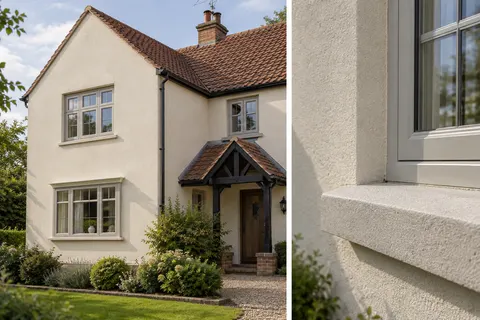
Look at the grain size, degree of relief and the way the surface has weathered. Note whether it has been painted, cleaned or repaired before. Two walls called roughcast or silicone can differ substantially in appearance. A useful repair brief describes the actual retained surface instead of treating the broad material family as a complete match specification.
Photographs help show the location and overall pattern, but they can flatten texture and distort colour. Inspection and a representative trial may be needed to understand the finish. If original product information exists, keep it with the brief. It provides a starting point, although it cannot guarantee that newly applied material will look identical to a surface that has spent years exposed to the weather.
Separate material compatibility from colour matching
A repair material has to suit the existing construction and proposed build-up. Selecting it solely because a small sample has the closest shade risks overlooking the more important connection with the wall. The specification should identify the supporting layers and relevant preparation as well as the face finish. Where the background differs within the opening, those differences need to be addressed.
Appearance can then be considered within the suitable options. A coating may help make the colour more consistent, but it may not remove a difference in texture or profile. The render colour-change page explains why compatibility and surface condition still matter when a wider coating is proposed. Repair and decoration should remain identifiable parts of the job.
Consider the viewing position honestly
A patch beside a front door is seen differently from one high on a concealed rear wall. Discuss the normal viewing positions and the importance of the elevation to the overall appearance. That context can inform the acceptable visual outcome without turning a less visible location into permission for poor repair work. Technical suitability and visual prominence are related but distinct considerations.
A close-up photograph can make small surface differences appear dramatic. A distant view can hide an abrupt edge that matters when walking past. Agree how the finished work will be reviewed and use a sample where useful. The standard should not shift unpredictably between a pavement view and a macro photograph after the job is complete.
Compare three finishing scopes
The smallest scope is a local repair left as a visible but accepted intervention. A second route is repair followed by a compatible coating across a larger area. A third is renewal or refinishing of a complete bounded face where the condition and intended appearance justify it. None is automatically correct; each should be assessed against the wall and the owner's expectations.
Make the differences explicit in the quotation. A whole-face coating is additional work even if it is chosen to improve the appearance of a small repair. Likewise, a complete re-rendering proposal needs a reason beyond avoiding discussion of a patch. Comparing those scopes separately allows the owner to understand what is necessary to address the defect and what is being selected for a broader visual result.


| Option | Potential benefit | Limitation to agree |
|---|---|---|
| Local repair | Limits intervention | Patch may remain visible |
| Repair and wider coating | More consistent colour | Texture differences may remain |
| Renew a bounded face | Coherent new surface | Larger scope must be justified |
Use a natural boundary where it helps
A corner, architectural band or other clear division can provide a sensible stopping point for a wider finish. An arbitrary line across an uninterrupted plane is often more noticeable. The boundary also needs to work technically, including the treatment of adjoining material and any specified movement detail. A convenient visual line is not enough if it produces a poor weathering arrangement.
If the wall continues around a return, decide whether that return is included. The scope should show the final stopping point from more than one angle where necessary. Small areas behind pipes or beside openings can otherwise remain ambiguous and become obvious only after the main surface has been renewed. Define them before material is ordered.
Let the trial demonstrate the intended combination
A useful trial can include the repair finish beside the retained texture or the proposed coating over representative repaired and existing areas. Its purpose should be clear. A sample on an unrelated board may establish grain but not show how the actual wall's profile affects the result. Agree what can reasonably be learned from the trial and what remains uncertain.
Allow the relevant drying or curing period before assessing it. A damp patch can look different in both tone and prominence from its eventual appearance. If the sample is changed, record which version has been approved. Product reference, location and photographs are more reliable than a description such as the lighter patch, especially when several trials have been made close together.
Include the practical costs of a wider finish
Extending the finishing area can change access, protection and the need to remove fittings. A decision that appears to add only paint may require substantial preparation around windows, roof edges or neighbouring surfaces. The quote should identify those consequences rather than treating them as incidental. The added scope should be assessed on the actual elevation.
The Alderley Edge rendering overview links the different service routes, and the cost guide helps compare preparation, access and application. Use the options to understand the trade-off between a limited intervention and a more uniform face. There is no need to invent a percentage saving or a local rate to make that comparison useful; the scope and expected result are the important starting points.
Keep the repair history after the wall looks better
Retain dated photographs, the cause assessment, the repair extent and the products used. If the area changes again, those records can help distinguish a new event from recurrence of the earlier defect. A wider coating may conceal the old patch visually, making the underlying repair history harder to reconstruct without that information.
At completion, inspect the repair and the agreed finishing area separately. Confirm that associated details have been addressed and fittings reinstated where included. Assess appearance against the approved reference after the relevant drying stage. Clear documentation allows a visible difference to be discussed as a specific issue, rather than leaving either party to rely on an unspoken expectation that every repair would disappear.
Common questions
Does the original colour code guarantee a match?
No. It identifies the specified colour but does not reproduce weathering, texture, previous coatings or application conditions. Keep the code as useful evidence while agreeing a realistic sample and review process.
Should a patch always be square?
The repair extent should follow the condition and the chosen method, with suitable edges and junctions. Its shape should not be selected merely to create a neat-looking outline around an uninvestigated defect.
See housing and planning information for Alderley Edge and nearby places, including the source and geography behind each figure.